

Digital Transformation in Retail: Complete Guide
The retail industry is changing rapidly as businesses adopt digital tools to improve customer experiences, manage inventory, simplify billing, and increase operational efficiency. From small…
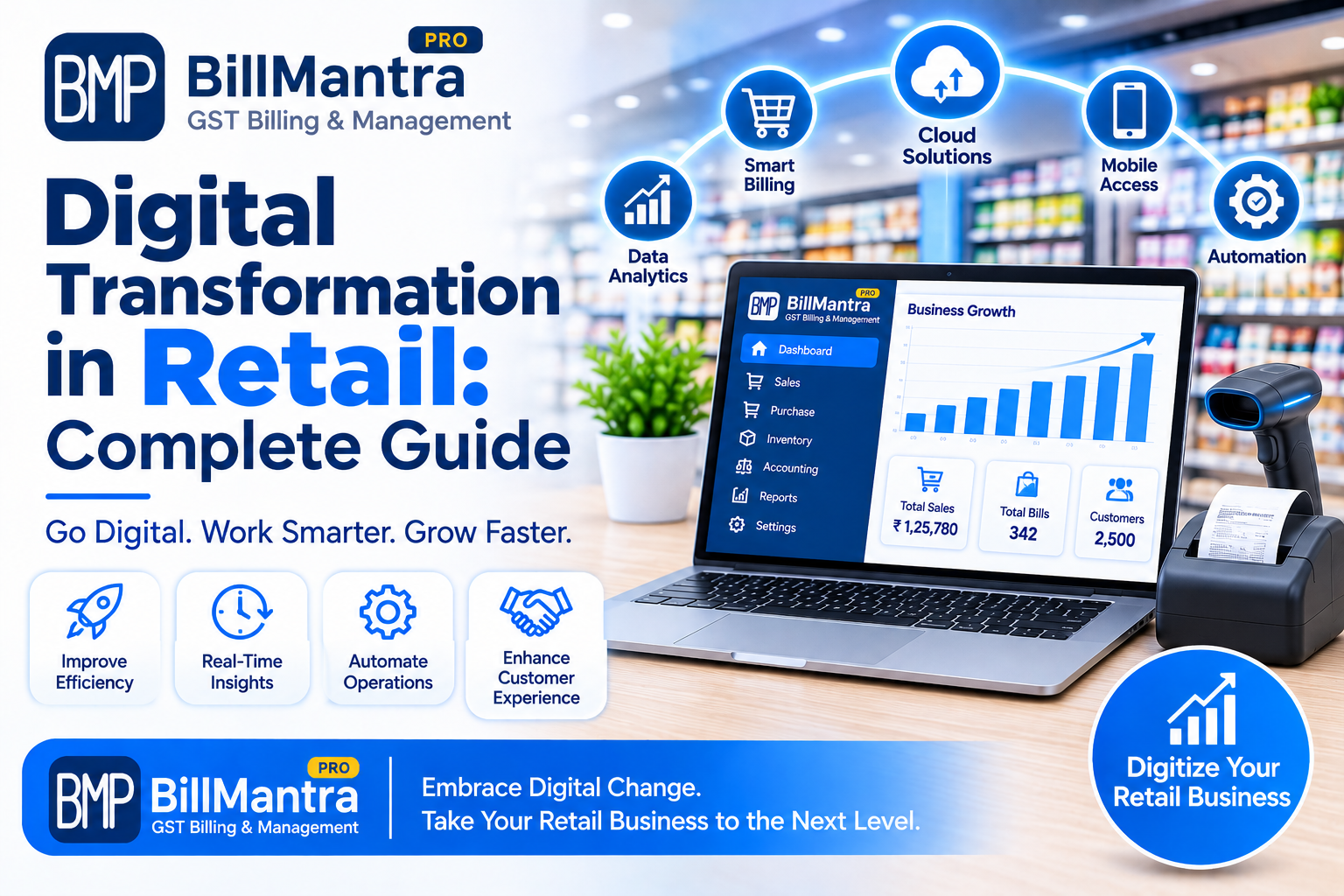
The retail industry is changing rapidly as businesses adopt digital tools to improve customer experiences, manage inventory, simplify billing, and increase operational efficiency. From small neighborhood shops to large retail stores, technology is becoming an important part of everyday business operations.
Digital transformation in retail means using digital technologies to improve how a retail business operates, serves customers, manages products, and makes business decisions. It goes beyond simply selling products online. It also includes digital billing, inventory management, customer relationship management, sales analytics, and automated business processes.
For retailers looking to reduce manual work and manage daily operations more effectively, adopting the right digital solutions can make a significant difference.
In this guide, we will explore the meaning of retail digital transformation, its benefits, essential technologies, implementation strategies, and how retail billing software like BillMantra can support the digital management of retail operations.
What Is Digital Transformation in Retail?
Digital transformation in retail is the process of integrating digital technology into different areas of a retail business to improve efficiency, customer service, and decision-making.
Traditional retail operations often depend on handwritten bills, manual stock registers, spreadsheets, and separate records for sales and purchases. These methods can become difficult to manage as a business grows.
Digital tools help retailers organize these activities through software and connected systems.
For example, a retailer can use billing software to generate invoices, record sales transactions, manage product information, and monitor stock levels. Instead of manually calculating every bill and updating registers, the retailer can maintain digital records and access information more conveniently.
Digital transformation can include:
- Retail billing software
- GST invoicing systems
- Inventory management software
- Point of Sale (POS) systems
- Barcode scanning
- Customer relationship management
- E-commerce platforms
- Digital payment systems
- Sales reporting and analytics
- Cloud-based business tools
The objective is to make retail operations more organized, efficient, and adaptable to changing customer expectations.
Why Is Digital Transformation Important in Retail?
Retail businesses face several challenges, including increasing competition, changing customer preferences, stock management problems, billing errors, and the need for faster service.
Managing all these activities manually can consume valuable time and create unnecessary complications.
Digital transformation helps retailers address these challenges by improving access to information and automating repetitive tasks.
1. Changing Customer Expectations
Customers increasingly expect convenient shopping experiences, quick billing, multiple payment options, accurate product information, and efficient customer service.
Digital tools help retailers respond to these expectations by streamlining transactions and organizing customer and product information.
2. Increasing Competition
Retailers compete with local businesses, organized retail chains, and online marketplaces. Better operational efficiency can help smaller businesses remain competitive.
Using digital billing, inventory, and sales management tools allows retailers to organize their operations and focus more on customers.
3. Need for Accurate Business Records
Manual records can become difficult to maintain when transaction volumes increase.
Digital systems help businesses maintain organized sales records, invoices, product details, and inventory information, depending on the software they use.
4. Growing Importance of Data
Retailers need to understand which products sell frequently, when demand increases, and which items require restocking.
Digital sales reports and inventory records can provide useful information for making better business decisions.
Key Technologies Driving Digital Transformation in Retail
Digital transformation does not require every retailer to adopt every available technology. Businesses can begin with the tools that address their most important operational challenges.
1. Retail Billing Software
Retail billing software is one of the most practical starting points for digital transformation.
It helps businesses create bills, record transactions, organize product information, and maintain digital sales records.
Depending on its features, billing software may also support GST invoices, payment records, inventory tracking, and sales reports.
For small and medium-sized retailers, digitizing billing can reduce repetitive manual work and improve transaction management.
2. Point of Sale (POS) Software
A Point of Sale system manages transactions at the point where customers purchase products.
Modern retail POS software can combine billing with product management, barcode scanning, inventory updates, customer records, and sales reporting.
POS systems are particularly useful for businesses that process frequent transactions or manage large product catalogs.
3. Inventory Management Software
Inventory management is essential for maintaining the right stock levels.
Digital inventory tools help retailers record product quantities, monitor stock movement, and identify items that may need replenishment.
Depending on the solution, inventory management software can support:
- Stock-level monitoring
- Product categorization
- Purchase and sales records
- Low-stock alerts
- Barcode-based product identification
- Stock movement reports
- Multi-location inventory tracking
Accurate digital inventory records can help retailers reduce stock discrepancies and make more informed purchasing decisions.
4. Digital Payment Systems
Digital payments provide customers with alternatives to cash transactions.
Retailers may accept UPI, cards, and other supported payment methods to make checkout more convenient.
Businesses should maintain accurate payment records and reconcile transactions with their billing and accounting information.
5. E-Commerce Platforms
An e-commerce platform enables retailers to sell products through a website or online marketplace.
For businesses with physical stores, online selling can create an additional sales channel and help them reach customers beyond their immediate location.
However, retailers should plan how online orders, product availability, returns, and inventory records will be managed.
6. Customer Relationship Management (CRM)
Customer relationship management tools help businesses organize customer information and interactions.
Depending on the system, retailers can use CRM tools to manage customer profiles, purchase history, service requests, and marketing communication.
Better customer information can help businesses provide more relevant service and build long-term relationships.
7. Cloud-Based Retail Solutions
Cloud-based software allows users to access supported business information through internet-connected devices.
Depending on the product, cloud solutions can help retailers access reports remotely, maintain centralized information, and manage business operations across locations.
Retailers should evaluate data security, backup policies, access controls, internet requirements, and offline functionality before selecting a cloud-based system.
Benefits of Digital Transformation in Retail
Adopting appropriate digital tools can improve several aspects of retail management.
Faster Billing and Checkout
Digital billing software can automate calculations and generate invoices quickly. Barcode scanning, where supported, can further simplify product entry.
This can help reduce manual effort during busy shopping hours.
Improved Inventory Control
Digital inventory records can make it easier to understand product availability and track stock movement.
Retailers can use this information to identify items that need restocking and avoid unnecessary inventory accumulation.
Better Sales Tracking
Digital systems can maintain transaction records and provide sales reports.
Retailers can review daily sales, product performance, and other available metrics to understand business activity.
Reduced Manual Work
Automating repetitive activities such as invoice generation, calculations, and recordkeeping can save time.
Employees can spend less time maintaining registers and more time assisting customers.
Better Customer Experience
Efficient billing, accurate product information, and organized customer records can help retailers provide a smoother shopping experience.
The impact depends on how effectively the software is implemented and used.
More Informed Business Decisions
Digital records make it easier to review historical transactions and identify patterns.
Retailers can use this information to support purchasing decisions, product selection, stock planning, and promotional activities.
Easier Business Expansion
As a retail business grows, managing more products, employees, and locations becomes increasingly complex.
Appropriate digital systems can provide a more structured foundation for expansion, especially when they support centralized reporting and multi-store management.
How Retail Billing Software Supports Digital Transformation
Billing is one of the most frequent activities in a retail store. Digitizing this process can be a practical first step toward improving the wider business.
A suitable retail billing solution can help businesses move from manual invoicing to organized digital transactions.
Digital Invoice Generation
Retailers can generate invoices using stored product information rather than preparing every bill manually.
Software may also support tax calculations, invoice printing, and digital invoice records.
Organized Sales Records
Every recorded transaction can contribute to a more organized sales history.
Retailers can use available reports to review transactions and understand business performance.
Connected Billing and Inventory
When billing and inventory functions are integrated, recording a sale can update the corresponding product quantity automatically.
This reduces the need to maintain separate sales and stock registers, provided the system is configured correctly and transactions are recorded consistently.
Simplified Product Management
Digital product catalogs allow retailers to maintain information such as product names, prices, categories, and applicable tax details.
Keeping this information updated can make billing and inventory management more efficient.
Easier Business Reporting
Digital reports can help retailers review sales and other operational information without manually calculating every figure.
The available reports depend on the software and its configuration.
How BillMantra Can Help Retail Businesses Go Digital
BillMantra is a retail billing software solution for businesses looking to simplify billing and organize day-to-day retail activities.
For retailers beginning their digital transformation journey, a suitable billing solution can help replace repetitive manual processes with structured digital workflows.
Depending on the features available in the selected BillMantra solution, businesses can explore capabilities related to:
- Retail billing and invoice generation
- GST billing requirements
- Product and sales management
- Inventory-related operations
- Digital transaction records
- Business reporting
The right combination of features can help retailers manage everyday activities more systematically.
For example, a small retail shop can begin by digitizing billing and maintaining product information. As its requirements grow, the business can evaluate additional tools for inventory control, sales analysis, and other operational needs.
Before choosing any software, retailers should verify the specific features, integrations, pricing, support, and operating requirements offered by the provider.
BillMantra can be considered by retailers looking for a digital approach to billing and related retail management activities.
Digital Transformation for Small Retail Shops
Small retailers do not necessarily need a complicated or expensive technology setup to begin digital transformation.
A gradual approach can make the transition easier to manage.
Start with Billing
Replace handwritten bills with appropriate billing software.
Choose a solution that meets the store's invoicing requirements and supports the necessary tax and transaction records.
Digitize Product Records
Create an organized digital product catalog with accurate product names, prices, and stock information.
This can help reduce confusion and make billing more consistent.
Introduce Inventory Management
Once product records are organized, use inventory features to track stock movement and identify replenishment needs.
Accept Digital Payments
Offer suitable digital payment methods and maintain clear transaction records.
Reconcile payment information regularly to identify discrepancies.
Review Sales Reports
Check available sales reports regularly to understand which products perform well and where improvements may be needed.
Train Employees
Make sure staff members understand how to create bills, update records, handle returns, and follow the correct transaction procedures.
Employee training is important for maintaining accurate digital records.
Common Challenges in Retail Digital Transformation
Although digital technology can improve retail operations, implementation requires planning.
1. Initial Cost
Software subscriptions, hardware, barcode scanners, printers, and staff training can create initial expenses.
Retailers should identify their essential requirements and compare the total cost before investing.
2. Resistance to Change
Employees who are accustomed to manual processes may take time to adjust to new systems.
Practical training and clear operating procedures can help make the transition smoother.
3. Data Accuracy
Incorrect product details, outdated prices, and inaccurate opening stock can affect the reliability of digital records.
Retailers should clean existing records and verify important information before implementation.
4. Internet and Hardware Requirements
Some cloud-based solutions require a reliable internet connection. POS systems may also need compatible computers, tablets, printers, or scanners.
Businesses should confirm hardware compatibility and whether offline operations are supported.
5. Data Security
Retail systems may store sensitive business and customer information.
Businesses should use strong passwords, appropriate user permissions, regular backups, and software with suitable security practices.
6. Choosing the Wrong Software
Selecting software without evaluating business requirements can lead to unnecessary expenses or missing features.
Retailers should compare solutions based on their current needs, expected growth, usability, support, and total cost of ownership.
Step-by-Step Guide to Implementing Digital Transformation in Retail
A clear implementation plan helps retailers adopt technology without disrupting everyday operations.
Step 1: Evaluate Current Operations
Identify the main problems in your business.
These may include slow billing, inaccurate stock records, manual reporting, or difficulty tracking sales.
Step 2: Define Your Goals
Set practical objectives, such as reducing billing time, improving stock accuracy, or maintaining organized sales records.
Step 3: Select the Right Software
Compare billing software, POS systems, and inventory tools based on the features your business actually needs.
Step 4: Organize Existing Data
Prepare accurate product details, prices, customer records where applicable, and opening stock information.
Step 5: Train Your Team
Teach employees how to use the system and establish procedures for billing, returns, stock adjustments, and transaction corrections.
Step 6: Start with Essential Functions
Begin with core activities such as billing and product management before introducing additional tools.
Step 7: Monitor Results
Review operational indicators such as billing time, stock discrepancies, transaction accuracy, and reporting efficiency.
Use these observations to identify areas that need improvement.
Future Trends in Retail Digital Transformation
Retail technology continues to evolve, giving businesses more options for improving customer service and internal operations.
Artificial Intelligence in Retail
AI-powered tools can support demand forecasting, product recommendations, customer service, and data analysis.
The usefulness of these tools depends on the quality of available data and the specific application.
Omnichannel Retail
Omnichannel retail connects physical stores, websites, marketplaces, and other customer touchpoints.
Retailers adopting this approach need reliable coordination between orders, product availability, payments, and customer information.
Data-Driven Decision-Making
Retailers are increasingly using sales and inventory data to understand demand, evaluate product performance, and improve purchasing decisions.
Automation of Routine Tasks
Automation can help reduce repetitive work in billing, reporting, stock monitoring, and other operational processes.
Personalized Customer Experiences
With appropriate consent and responsible data practices, customer information can help businesses provide more relevant offers and service.
Retailers should ensure that customer data is collected, stored, and used in accordance with applicable privacy requirements.
Frequently Asked Questions
What is digital transformation in retail?
Digital transformation in retail is the use of digital technologies to improve retail operations, customer experiences, inventory management, billing, reporting, and business decision-making.
Why is digital transformation important for retailers?
It can help retailers organize business records, reduce manual work, improve stock visibility, simplify transactions, and make better-informed operational decisions.
Which software is useful for retail digital transformation?
Common solutions include retail billing software, POS software, inventory management systems, CRM tools, e-commerce platforms, and sales analytics tools. The right combination depends on the business.
Can small retail shops benefit from digital transformation?
Yes. Small shops can start with digital billing, product records, and inventory management. They can introduce additional tools as their operational requirements grow.
How does billing software help retailers?
Billing software can simplify invoice generation, record sales transactions, organize product information, and provide access to digital records. Additional features vary by provider.
What is the difference between retail billing software and POS software?
Billing software primarily focuses on invoicing and sales transactions. POS software generally combines billing with a broader range of retail functions, such as inventory management, barcode scanning, and sales reporting.
Is cloud-based retail software better than offline software?
Neither option is automatically better for every business. Cloud-based software may offer remote access and centralized information, while offline-capable systems can be useful where connectivity is unreliable. Retailers should compare security, backup, accessibility, and offline capabilities.
How can BillMantra support retail digital transformation?
BillMantra is a retail billing software solution that businesses can consider for digitizing billing and organizing related retail operations. Retailers should confirm the available features and plan details to determine whether the solution meets their requirements.
Conclusion
Digital transformation in retail is about using technology to make business operations more organized, efficient, and responsive to customer needs.
From billing software and inventory management to digital payments and sales analytics, the right tools can help retailers reduce repetitive work, maintain better records, and make more informed decisions.
Businesses do not need to adopt every technology at once. Starting with essential activities such as billing and product management can create a practical foundation for further improvements.
For retailers looking to modernize their daily operations, BillMantra is worth considering as part of a digital approach to retail billing and business management.
Ready to simplify your retail billing process? Explore BillMantra and evaluate the features that best match your store's billing, inventory, and business management requirements.
Try BillMantra free
GST invoices, inventory, payments, reports — all in one app. No credit card.
Get started →